From Series 0 to N700S
Each new series has been faster, quieter or more efficient than the last.
How this site works. Every fact is in our own words and linked to its source, beside it. Where good sources disagree, we show each version in a “Sources differ” box.
Series 0
The first trains, the Series 0, were the first in the world to run in passenger service at a top speed of 210km/h. Embassy of Japan
Shima’s team designed the sleek cone-shaped front, inspired by the aircraft of the time. NRM
22-141 was the last car of the first series to be withdrawn from service. Science Museum Group
Nozomi
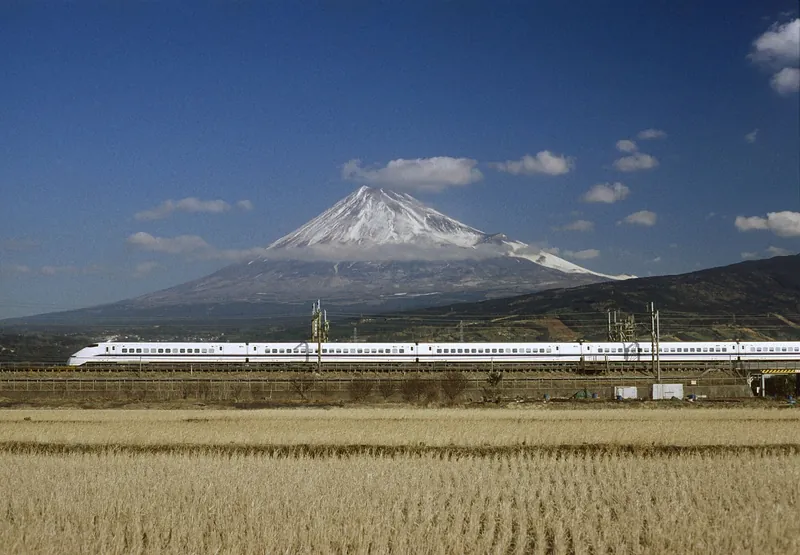
The first ‘Nozomi’ trains, the Series 300, started running on the Tokaido Shinkansen in March 1992. JR Central history
With the Nozomi, Tokyo to Osaka came down to a fastest time of 2 hours 30 minutes. JR Central, 2024
The Series 700 joined the Nozomi in March 1999. JR Central history
In October 2003 Shinagawa station opened and every Tokaido Shinkansen train’s top speed was raised to 270km/h. JR Central history
The Series N700 began Nozomi services in July 2007, and the N700A in February 2013. JR Central history
The latest Tokaido type, the N700S, began running on 1 July 2020. Embassy of Japan
The 500 Series
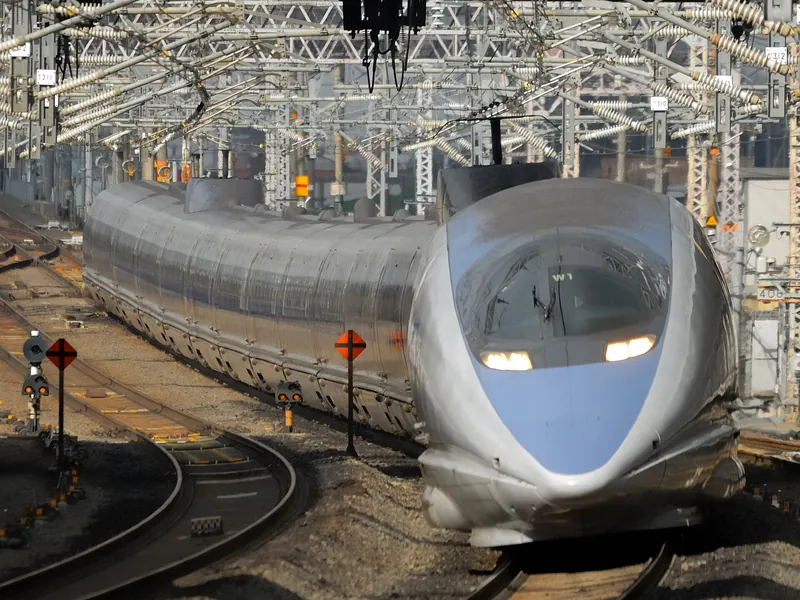
In 2005 JR West’s 500 Series, with its long nose, was running between Tokyo and Hakata at up to 300km/h. JFS, 2005
The 500 Series nose is 15 metres long, and it cut air pressure by 30% and electricity use by 15%, while running 10% faster. JFS, 2005
Its nose came from a bird; that story is on the speed page.
JR East: E5, E6 and E8
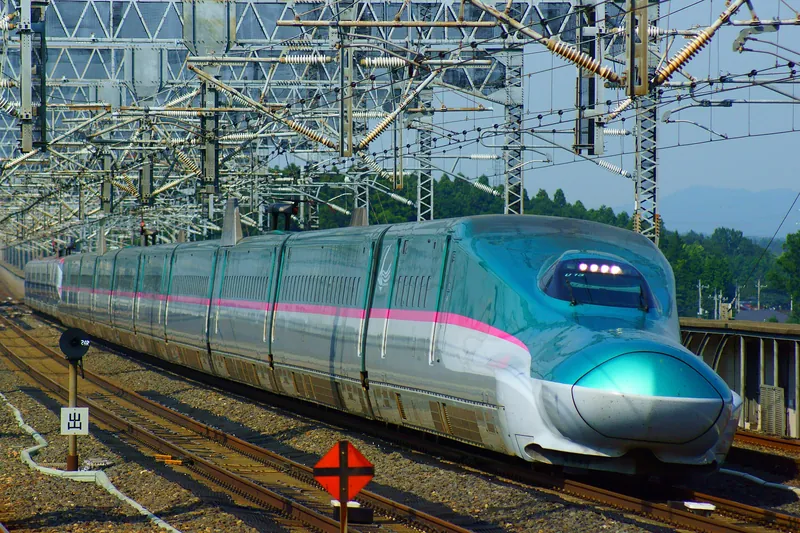
JR East’s Series E5 began regular running at 320km/h on the Tohoku Shinkansen on 16 March 2013, the fastest speed then allowed for passenger trains in Japan. Railway Gazette, 2013
The E5 was designed to bring Tokyo to Shin-Aomori down to 3 hours 5 minutes. Railway Gazette, 2013
The E6 ‘Komachi’ runs to Akita, joining the Shinkansen and older lines with no need to change trains. JR East
The E8, for Yamagata, began running on 16 March 2024; it has a top speed of 300km/h and a 9-metre nose. JR East
Doctor Yellow
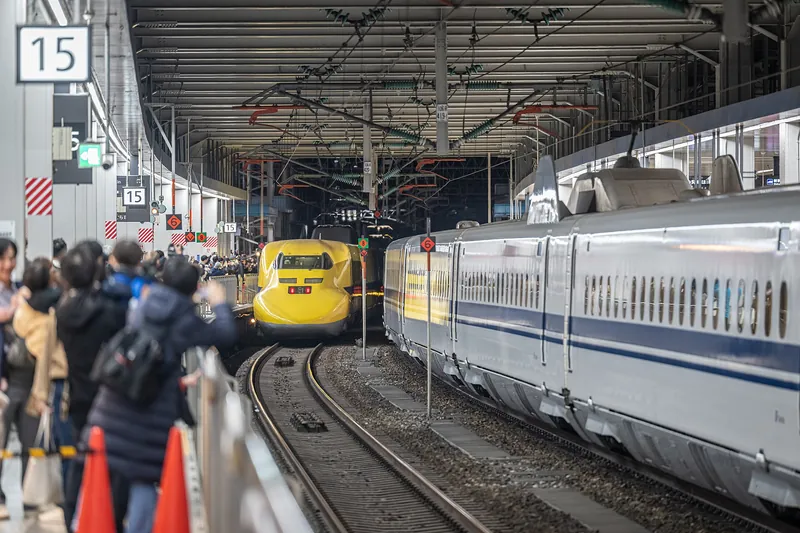
‘Doctor Yellow’ is the nickname of the yellow Shinkansen trains that inspect the track, the overhead wires and the signals. Asahi, 2025
Seeing one is said to bring good luck, because they run only once every 10 days and their times are never published. Asahi, 2025
JR Central’s Doctor Yellow made its last run on 28 and 29 January 2025, from Tokyo to Hakata and back, retired because of its age. Asahi, 2025
JR West’s Doctor Yellow was due to keep running until at least 2027. Japan News, 2025
Thinking of a bullet train of your own? model.railways.im explains scale and gauge before you choose a model.
Next: speed →